35% off on product page · save $4.84
Baby Rash or Irritation? What Parents Should Notice

Before studying the skin, notice how your baby is feeding, breathing, and behaving. Are they alert as usual? Do they seem unusually uncomfortable or difficult to wake? These details can be more important than the color or shape of a patch.
Write down when you first noticed the change, where it began, and whether it has spread. Tell a clinician about fever or other symptoms. A baby younger than 3 months with a temperature of 100.4°F (38°C) or higher needs prompt medical assessment , even if the skin change seems minor.
“Rash” describes a skin change; “irritation” may describe a response to moisture, friction, or a product. Neither word identifies a cause. Note texture, warmth, swelling, and tenderness as well as color. On darker skin tones, inflammation may appear purple, gray, or darker than surrounding skin rather than bright red.
| What you notice | What to record |
|---|---|
| Changes beneath a diaper | Moisture, skin folds, and recent wipes or creams |
| Small bumps on the face | Age, location, swelling, or crusting |
| Dry or rough patches | Location, cracks, and discomfort |
| Widespread or changing spots | Timing, fever, feeding, breathing, and new exposures |
These observations can help you explain a change to a clinician; they cannot identify a condition on their own.
Featured in this guide
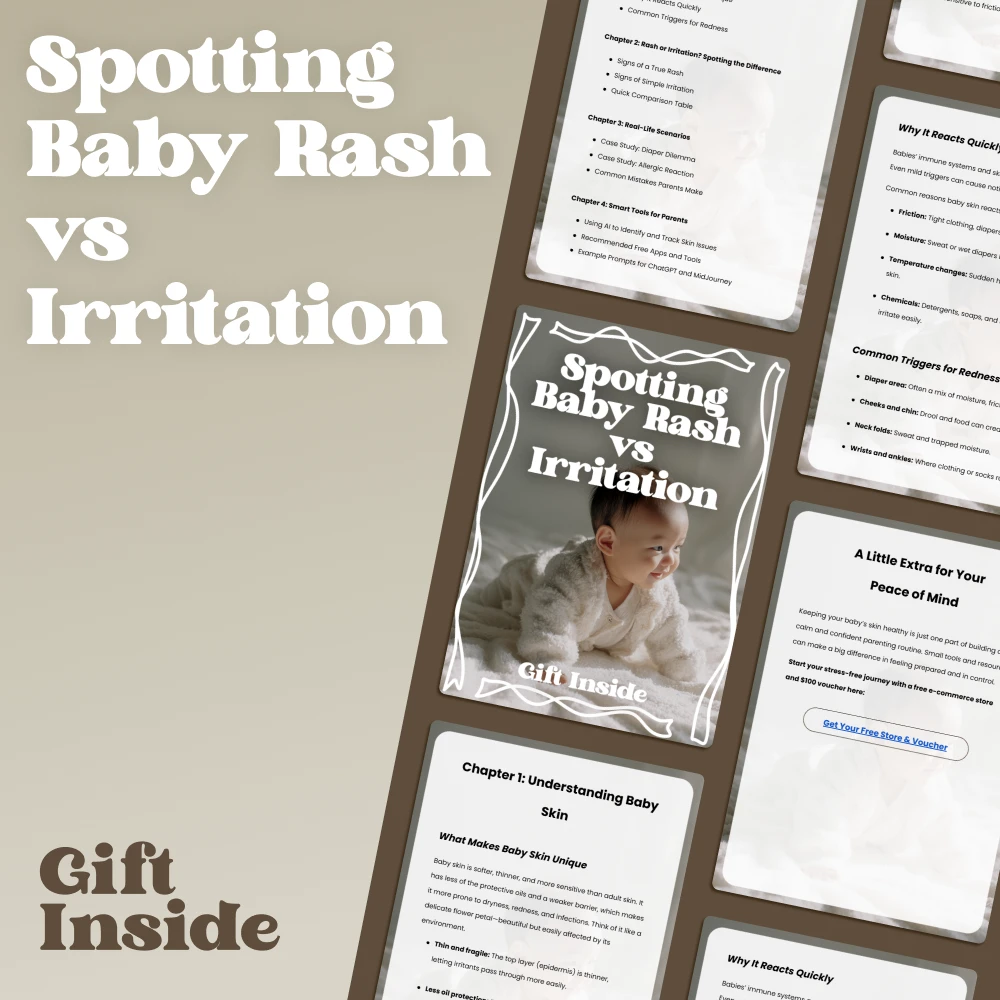
Spotting Baby Rash vs Irritation – Parent-Friendly Guide to Baby Rash vs Irritation Signs, Newborn Skin Care Help, Printable Digital Download
Clean skin with lukewarm water and a soft cloth, then pat dry rather than rubbing. If a product is needed, choose a fragrance-free option and avoid introducing several new products at once. Change wet or soiled diapers promptly, and ask your baby’s clinician before using medicated creams, especially if the skin is worsening.
A dated photo taken in good light may help you describe a change, but it cannot replace an examination. The American Academy of Dermatology’s baby skin care advice offers further guidance on everyday routines. If keeping routine supplies together is useful, a ceramic bowl could hold small items on an adult-only shelf; keep breakable objects out of your baby’s reach.
Seek emergency care if your baby has trouble breathing, is unusually difficult to wake, or has a rash that does not fade when pressed—particularly if they seem unwell. Do not delay care to compare pictures.
Seek prompt medical advice for a temperature of 100.4°F (38°C) or higher in a baby under 3 months , or for blisters, spreading redness, swelling, drainage, poor feeding, or a baby who seems ill. Contact your baby’s clinician if a skin change persists, worsens, or leaves you uncertain. The NHS guide to rashes in babies and children provides additional guidance on symptoms that need attention.
The Spotting Baby Rash vs Irritation printable guide is an optional parent-friendly digital download for organizing what you notice and what you want to ask a clinician. It cannot diagnose a rash or replace medical care. If your baby has a warning sign, seek help first.
Check the listed dimensions for a reference for your questions against the available vehicle space before use.
Note its location, appearance, timing, and spread, along with any fever or changes in feeding or behavior. Share those details with your baby’s clinician; many conditions look alike.
Clinician-reviewed resources, such as the NHS guide linked above, may include images. Lighting, skin tone, and the stage of a skin change affect how it looks, so a picture cannot confirm a diagnosis.
Several temporary skin changes are common in newborns, but which ones are seen most often varies by age and setting. A clinician can help identify your baby’s particular skin change, especially if other symptoms are present.
There is no single set of four types that can reliably classify every baby rash. Clinicians consider the pattern, location, symptoms, and your baby’s overall health rather than relying on a simple list.
Timing, location, recent exposures, and other symptoms can help a clinician assess the difference; bumps alone may not. Seek prompt advice for swelling or rapid spreading, and emergency care if your baby has trouble breathing.










Leave a comment