10% off on product page · save $1.55
How to Save Money to Build a House: A Practical Plan
Begin by separating the total project price from the cash required before and during construction. Depending on your financing, upfront costs may include a land deposit, loan down payment, surveys, architectural or engineering services, permits, insurance, utility connections, closing fees, and temporary accommodations.
Request local estimates instead of relying entirely on national cost-per-square-foot averages. Labor rates, material availability, building codes, soil conditions, grading needs, and access to public utilities can significantly affect the final price.
Sample Cash-Goal Worksheet
| Budget category | Sample amount | Planning note |
|---|---|---|
| Land or lot costs | the listed price,000 | Include the deposit, closing costs, survey, and due diligence |
| Design, permits, and professional fees | the listed price,000 | Confirm local requirements with authorities and professionals |
| Construction down payment | the listed price,000 | Verify the lender’s required borrower contribution |
| Site work and utilities | the listed price,000 | Consider grading, driveways, septic, wells, and extensions |
| Contingency reserve | the listed price,000 | Adjust for project complexity and risk |
| Total illustrative cash goal | the listed price,000 | Replace sample figures with local estimates |
A contingency reserve of roughly 10% to 20% of estimated project costs may help absorb price increases, design revisions, delays, or unexpected site work. Keep this reserve—and the entire building fund—separate from your household emergency fund.
Choose a target date, subtract what you have already saved, and divide the remaining gap by the number of months available.
Test that target against income and essential expenses. If it is not sustainable, extend the timeline or reconsider the lot, floor plan, finishes, or building size. Automating transfers after each payday can make saving consistent. Milestones—such as completing the permit fund, down payment, and contingency reserve—also make a large goal feel more attainable.
Featured in this guide
From Spare Change to Dream Home: The Smart Guide to Saving for Your Build | How to Save Money to Build a House eBook, Budget Planning Guide, Home Savings Checklist
Review several months of bank and credit card statements. Separate essential bills, flexible necessities, subscriptions, convenience purchases, and irregular annual expenses. Recurring costs with limited value are often the best starting point: compare insurance rates, renegotiate internet or mobile plans, cancel unused memberships, and address expensive debt where practical.
Set reasonable limits for groceries, dining, clothing, entertainment, and travel rather than eliminating everything enjoyable. Create sinking funds for predictable expenses such as vehicle maintenance, holidays, school costs, and annual premiums so they do not interrupt home contributions. Raises, refunds, bonuses, gifts, and proceeds from unused belongings can then accelerate progress.
Match the account to your expected timeline. Funds needed within a few years generally belong in accessible, lower-volatility options rather than investments that could decline shortly before construction.
Compare insured savings accounts, money market deposit accounts, certificates of deposit, and short-term government securities. Consider yield, access, minimum balances, maturity dates, and withdrawal penalties. As balances grow, review the FDIC’s deposit insurance guidance. A qualified financial or tax professional can help with ownership structures, taxes, and risk decisions.
Review your credit reports early, dispute legitimate errors, and keep income and debt obligations stable where possible. Lenders may evaluate payment history, debt levels, cash reserves, income consistency, plans, contractor estimates, and the property itself.
Compare construction-only and construction-to-permanent loans, including down payments, draw schedules, inspections, fees, rate locks, and conversion terms. The Consumer Financial Protection Bureau’s home loan toolkit and HUD’s home-buying resources offer additional guidance. Keep tax returns, statements, land records, permits, and explanations for large deposits organized.
Schedule a short monthly review to record the balance, compare actual contributions with your target, update estimates, and select one improvement for the coming month. Reprice major categories periodically because land, labor, materials, and borrowing costs can change.
The From Spare Change to Dream Home savings guide provides an eBook, budget-planning framework, and home savings checklist for organizing these tasks. Celebrate milestones with small planned rewards rather than withdrawals from the fund.
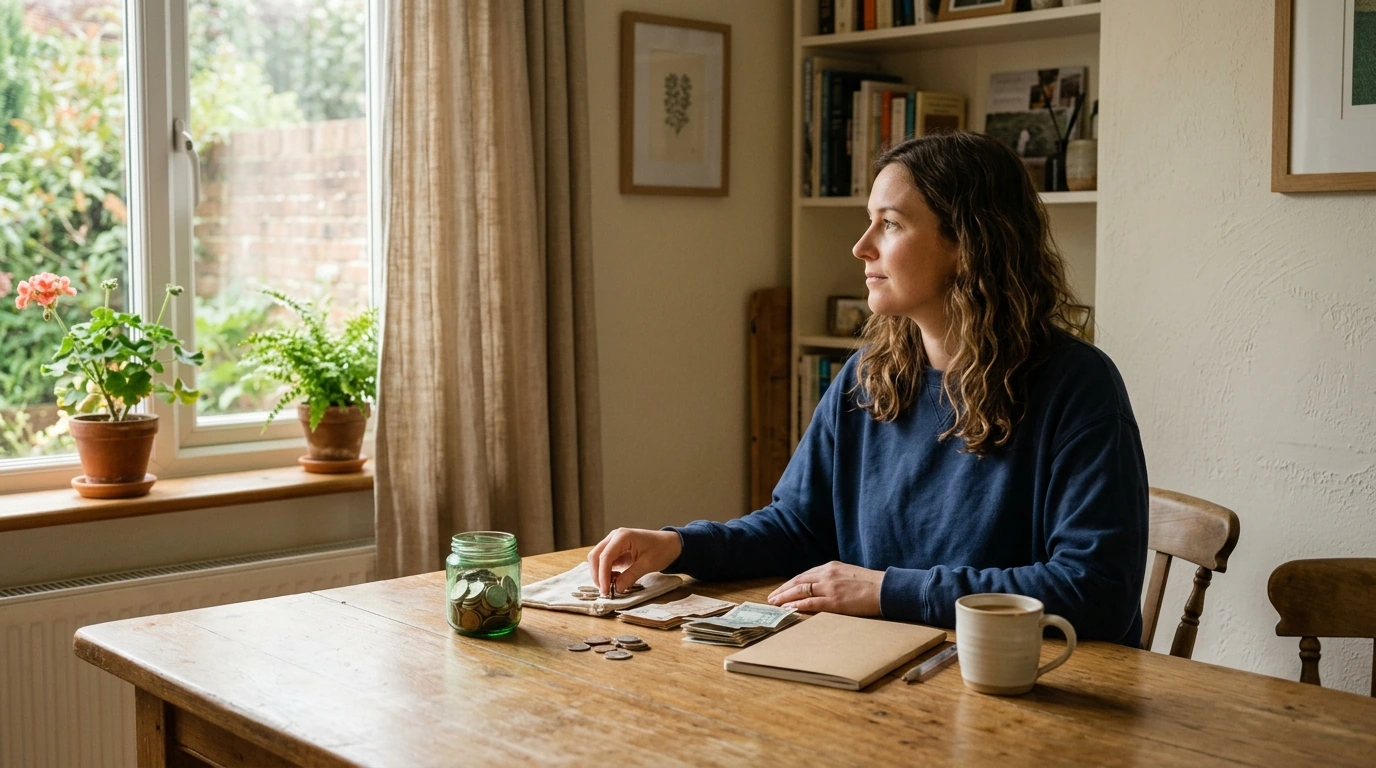
“Just finished reading this eBook, and wow! This guide has transformed my penny jar into a house fund. 🏠 Who knew saving could be so simple? The checklist is super handy too!”
Compare related options such as Emotional Intelligence in Action: 10 in 1 Digital Download Bundle to match features, dimensions, and use case before choosing.
The phrase can describe different methods, but it commonly refers to dividing savings into three purposes or following three structured saving steps. Confirm the specific definition used by any plan before applying it to your budget.
It depends on what “bills” excludes, household size, location, food, transportation, healthcare, debt, and irregular costs. Track actual spending and preserve a buffer before directing the remainder to a building fund.
You would need to save about $3,333 per month or $770 per week. Such an aggressive target usually requires substantial disposable income, temporary spending reductions, additional earnings, and lump-sum contributions, so it is not realistic for every household.










Leave a comment